
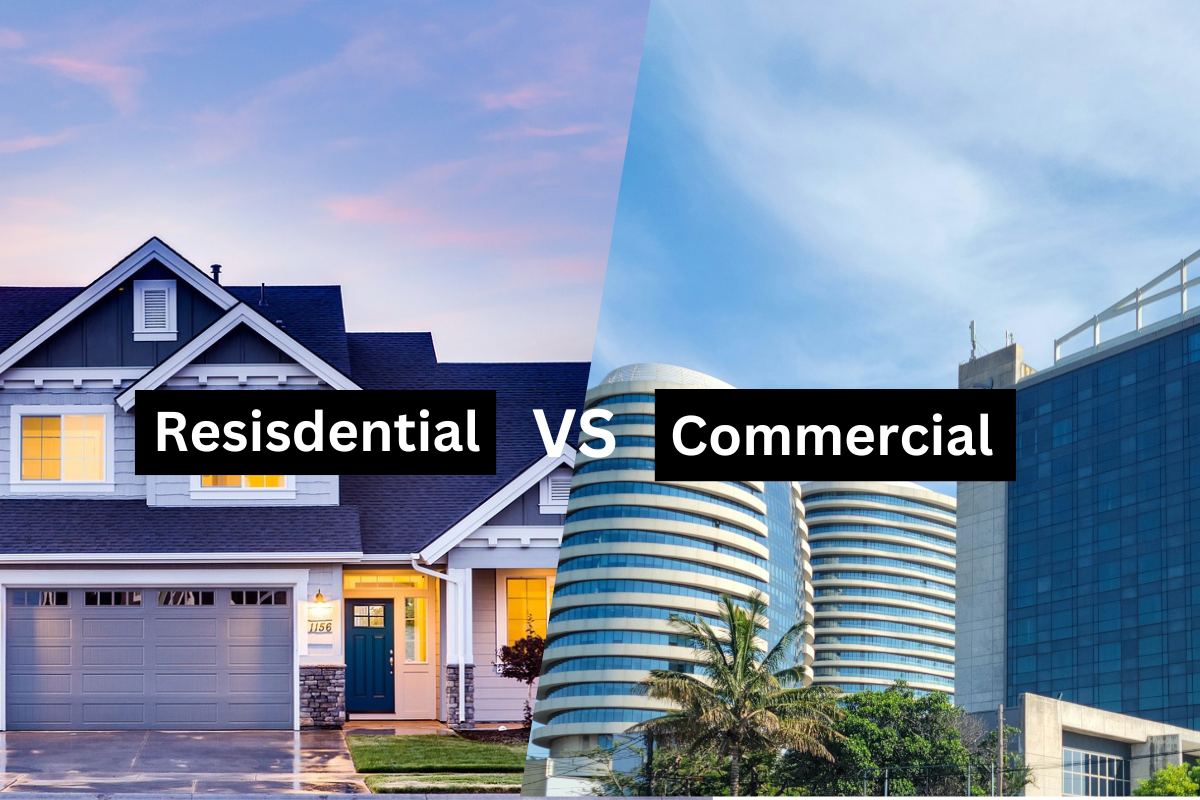
Investing in property can be a rewarding venture, but choosing between commercial and residential properties can be challenging. Each type of investment comes with its own set of advantages and disadvantages. This article breaks down the key pros and cons of both commercial and residential property investments to help you make an informed decision.
Commercial vs Residential Property Investment: Pros and Cons
Investing in property can be a rewarding venture, but choosing between commercial and residential properties can be challenging. Each type of investment comes with its own set of advantages and disadvantages. This article breaks down the key pros and cons of both commercial and residential property investments to help you make an informed decision.
Commercial Property Investment

Commercial properties include office buildings, retail spaces, warehouses, and industrial buildings. Here are the pros and cons of investing in commercial properties.
Pros
- Higher Income Potential: Commercial properties typically offer higher rental yields compared to residential properties. Businesses are willing to pay more for prime locations that attract customers and facilitate operations.
- Longer Lease Terms: Commercial leases usually span several years, providing a stable and predictable income stream. Longer leases mean fewer tenant turnovers and less frequent vacancy periods.
- Professional Tenants: Commercial tenants are often businesses that take better care of the property. They are more likely to maintain the premises to attract clients and comply with business regulations.
- Triple Net Leases: In some commercial leases, tenants cover property expenses like maintenance, insurance, and property taxes. This reduces the landlord’s operating costs and responsibilities.
Cons
- Higher Initial Investment: Commercial properties often require a larger upfront investment, including higher down payments, purchase prices, and maintenance costs.
- Market Volatility: The commercial real estate market can be more volatile, affected by economic downturns and changes in business environments. Vacancies can last longer during economic recessions.
- Complex Management: Managing commercial properties can be more complex, requiring knowledge of business regulations, zoning laws, and tenant management. Hiring a property management company might be necessary.
- Limited Buyer Pool: Selling commercial properties can be more challenging due to a smaller pool of potential buyers compared to residential properties.
See>>> Top 10 Emerging Real Estate Markets in Nigeria: Where to Invest
Residential Property Investment

Residential properties include single-family homes, apartments, and condos. Let’s explore the pros and cons of investing in residential properties.
Pros
- Lower Entry Costs: Residential properties usually have lower purchase prices and down payment requirements, making it easier for first-time investors to enter the market.
- Stable Demand: People always need places to live, ensuring a consistent demand for residential properties. This stability can lead to more reliable rental income.
- Easier Financing: Obtaining financing for residential properties is often easier and more accessible, with a variety of mortgage options available.
- Potential for Appreciation: Residential properties in desirable locations tend to appreciate over time, providing the potential for significant capital gains.
Cons
- Lower Rental Yields: Residential properties typically offer lower rental yields compared to commercial properties. Rental income may not be as high, especially in less sought-after areas.
- Higher Tenant Turnover: Residential leases are usually shorter, leading to more frequent tenant turnover. This can result in higher vacancy rates and additional costs for finding new tenants.
- Maintenance Responsibilities: Landlords are responsible for maintenance and repairs in residential properties, which can be time-consuming and costly.
- Emotional Investment: Residential property investment can be more emotionally driven, as it often involves homes where people live. This emotional aspect can influence investment decisions and management practices.
See>>> Places to Buy Land In Nigeria
Overall Comparison: Commercial vs Residential
Let’s compare commercial and residential property investments across various factors to determine which is more advantageous in each category.
1. Return on Investment (ROI)
- Commercial Wins: Higher rental yields and longer leases typically result in better ROI for commercial properties.
2. Initial Investment
- Residential Wins: Lower purchase prices and down payment requirements make residential properties more accessible for new investors.
3. Lease Terms
- Commercial Wins: Longer lease terms provide stable and predictable income for commercial properties.
4. Tenant Management
- Commercial Wins: Professional tenants in commercial properties tend to maintain the premises better and have fewer issues compared to residential tenants.
5. Financing
- Residential Wins: Easier financing options are available for residential properties, making it simpler to secure loans.
6. Market Stability
- Residential Wins: The residential market is generally more stable due to consistent demand for housing, whereas commercial properties can be more affected by economic fluctuations.
7. Maintenance Costs
- Commercial Wins: Triple net leases in commercial properties can reduce the landlord’s maintenance responsibilities and costs.
8. Selling Property
- Residential Wins: A larger pool of potential buyers makes it easier to sell residential properties compared to commercial ones.
What to Consider Before Choosing to Build on Your Land: Commercial or Residential
1. Location
Location is key. Some areas are better suited for residential buildings, while others are more appropriate for commercial purposes. Consider the following:
- Residential: Ideal locations are quiet, safe, and have amenities like schools, parks, and grocery stores nearby.
- Commercial: Look for areas with high foot traffic, good visibility, and accessibility. Proximity to other businesses can also be beneficial.
2. Zoning Laws
Check local zoning regulations. These laws determine what kind of buildings can be constructed in specific areas. Make sure your plans comply with these regulations to avoid legal issues.
3. Market Demand
Understand the demand in your area:
- Residential: Look at the housing market. Is there a high demand for homes or apartments?
- Commercial: Assess the need for office spaces, retail stores, or other commercial properties.
4. Budget
Budget is a crucial factor. Building costs can vary significantly between residential and commercial projects. Commercial buildings often require more investment due to higher construction and maintenance costs.
5. Future Growth
Consider the future growth and development plans for the area. Areas slated for infrastructure improvements or business developments may be more suitable for commercial projects.
6. Infrastructure
Evaluate the infrastructure:
- Residential: Ensure there are adequate utilities like water, electricity, and sewage systems.
- Commercial: Check for additional needs such as ample parking, internet connectivity, and transportation links.
7. Environmental Factors
Consider environmental factors like:
- Residential: Green spaces and lower pollution levels are desirable.
- Commercial: Accessibility and minimal restrictions on business operations are important.
8. Financial Returns
Think about potential financial returns:
- Residential: Typically, rental income or property appreciation.
- Commercial: Higher rental income potential but may require a longer time to find tenants.
9. Management and Maintenance
Consider the ongoing management and maintenance required:
- Residential: Generally, residential properties require less intensive management but still need regular upkeep like landscaping, plumbing, and electrical maintenance.
- Commercial: Commercial properties often demand more rigorous management and maintenance, including security, cleaning services, and compliance with health and safety regulations. You may need to hire a property management company to handle these tasks.
10. Personal Goals
Align your decision with your personal goals and interests. If you’re passionate about a certain type of development, it might influence your choice.
11. Professional Advice
Consult with professionals such as real estate agents, architects, and financial advisors. They can provide valuable insights and help you make an informed decision.
By considering these factors, you can make a well-informed decision on whether to build a commercial or residential property on your land.
Conclusion
Both commercial and residential property investments have their unique pros and cons. Commercial properties offer higher income potential, longer lease terms, and professional tenants but require higher initial investments and complex management. Residential properties provide easier entry, stable demand, and potential for appreciation but have lower rental yields and higher tenant turnover.
Ultimately, the choice between commercial and residential property investment depends on your financial goals, risk tolerance, and investment strategy. Carefully evaluate these considerations and conduct thorough research to make an informed decision that aligns with your financial objectives and investment strategy. Diversifying your investment portfolio by including both types of properties could also be a smart approach to balance risks and rewards.
FAQ
Why is commercial real estate better than residential?
Commercial real estate (CRE) can be considered better than residential real estate (RRE) for several reasons:
- Higher Income Potential: CRE typically offers higher rental yields compared to RRE. Businesses can often afford higher rents than individuals.
- Longer Lease Terms: Commercial leases usually range from 3-10 years, providing a more stable and predictable income stream.
- Triple Net Leases: Many commercial leases are triple net, meaning the tenant is responsible for property taxes, insurance, and maintenance, reducing the landlord’s expenses.
- Appreciation: CRE can appreciate at a faster rate due to its income potential and development in the surrounding area.
- Diverse Tenant Base: A commercial property with multiple tenants (e.g., a shopping center) spreads the risk, as losing one tenant does not result in a total loss of income.
Is there more money in commercial or residential real estate?
Commercial Land Value vs Residential
Commercial land value:
- Higher per square foot due to income potential.
- Influenced by location, foot traffic, and business demand.
Residential land value:
- Typically lower per square foot.
- Influenced by amenities, schools, and neighborhood quality.
What type of Commercial Property is Most profitable?
The profitability of commercial properties varies, but typically:
- Office Buildings: Especially in prime locations.
- Retail Spaces: In high-traffic areas.
- Industrial Properties: Warehouses and logistics centres are in demand.
- Mixed-Use Developments: Combine residential, retail, and office spaces.
Is Rsidential Rental property considered Commercial?
No, residential rental properties are typically not considered commercial. Residential rental properties fall under residential real estate, whereas commercial real estate includes properties like office buildings, retail spaces, warehouses, and multifamily properties (with 5 or more units).
Can you do both Commercial and Residential real estate?
Yes, many investors and real estate professionals diversify their portfolios to include both commercial and residential properties. This diversification can balance risk and maximize returns, as the two markets often behave differently and can provide complementary income streams.
- Follow me on TikTok for quick tips and behind-the-scenes tours
- Subscribe to my YouTube channel for in-depth videos and property showcases
- Follow me on Facebook for updates, listings, and real estate advice
