

Buying land in Nigeria is an exciting prospect, but the process can be complex, especially when it comes to understanding the required documentation or titles. Incomplete or missing documents can lead to costly legal disputes and even loss of your investment. This guide aims to shed light on the essential documents and the titles you need to know before you buy land in Nigeria.
What is Land Title
A land title is a legal document that proves ownership of a specific piece of land. It’s essentially a certificate that says “This land belongs to X person or entity”. Here’s a breakdown of what it does:
Key points about land titles:
- Proof of ownership: It’s the primary evidence that you (or whoever is named on the title) legally own the land.
- Details about the property: It includes information like the size and location of the land, its boundaries, and any restrictions on its use.
- Transferable: Ifyou sell the land, the title is transferred to the new owner.
- Recorded officially: Land titles are typically registered with a government agency, like a land registry, for public records.
- Important for transactions: It’s essential for buying, selling, or borrowing money against the land as collateral.
Types of Land Titles and Their Meanings
1. Certificate of Occupancy (C of O)
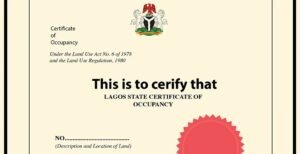
This is considered the strongest evidence of land ownership in Nigeria. It’s a government-issued document granting the holder the right to occupy and develop the land for a specific period, typically 99 years. While it offers a strong sense of ownership, remember that ultimate ownership rests with the state government after the lease expires. C of Os are essential for most land transactions and securing loans with the land as collateral. See Types of C of O in Nigeria.
Related>>>
- How To Verify Land Titles and Registration In Nigeria
- 16 Things to Know Before Buying Land in Nigeria
- Best Place to Buy Land in Nigeria
- How to Spot Fake Real Estate Sellers
- Why Land Banking Could Be Your Next Investment Powerhouse
2. Registered Court Judgment
A court judgment awarding land ownership rights can serve as a valid title document. This typically occurs after legal disputes or claims regarding land possession.
3. Right of Occupancy (R of O)
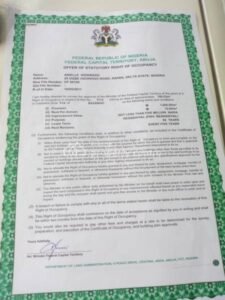
This grants the right to occupy and develop land for a specified period, usually shorter than a C of O. It’s often used for agricultural purposes or temporary structures and involves less stringent regulations.
4. Governor’s Consent
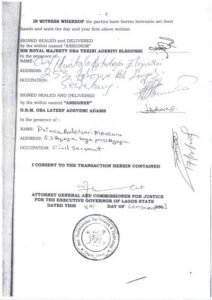
This permission, granted by the state governor, is mandatory before transferring land ownership with a C of O. It ensures proper procedures are followed and protects against fraudulent transactions.
5. Excision and Gazette
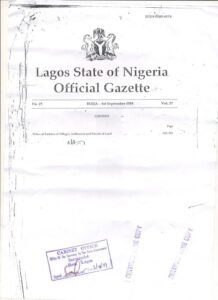
Excision is the process by which the government releases a portion of land from the larger expanse of government-acquired land for individuals or communities to own. A Gazette is an official publication by the government indicating such releases. Following a survey and approval, the land details are published in an official government gazette, becoming a valid title document. So there can not be a gazette without excision.
What is Land Documents
Land documents are legal instruments that establish, transfer, and convey land or ownership rights. They are essential for ensuring that land transactions are conducted legally and that the rights of both buyers and sellers are protected. The specific documents required for a land transaction can vary depending on the nature of the ownership and the location of the land.
List and Types Of Land Documents
1. Deed of Assignment
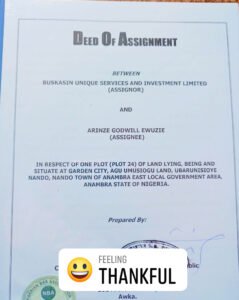
This legal document transfers ownership of a specific portion of land held under a C of O or another title. It requires proper registration for legal validity. It also outlines the sale terms, including price, payment schedule, and possession date. Both parties must sign and witness it by a lawyer. Deed of Assignment comes with a registered Survey plan, if you bought land from a real estate firm. Read: Why Buying Land Through a Real Estate Company Makes Smart Sense
2. Registered Survey
A registered survey isn’t just a map; it’s a legal document proving land ownership. It defines a property’s boundaries and dimensions, registered with the Surveyor-General’s office for official recognition. See how the processes involved before a land becomes a Registered Survey.
3. Land Purchase Receipt
This document serves as proof of payment for the land, particularly crucial when customary practices are involved.
4. Contract of sale
A contract of sale is a legally binding agreement between a buyer and seller outlining the terms of a transaction involving the transfer of goods, services, or property. It serves as a written exchange record, protecting both parties and ensuring a smooth and secure transaction. See Understanding Land Sales Agreement (Contract of Sale) in Nigeria.
5. Grant of Probate and Letter of Administration
These documents establish legal authority to manage and distribute the assets of a deceased landowner. They play an important role in transferring land ownership through inheritance.
6. Development Levy Receipt
Development levy payments may be necessary depending on the location and intended use of the land. Receipts for such payments demonstrate compliance with local regulations. Most of the time, it is usually paid before you start development on the land.
Documents to Obtain Immediately After Buying the Land
- Duplicate Copy of the C of O: It is essential to obtain a duplicate copy of the Certificate of Occupancy from the seller and ensure that it is duly signed and stamped by the appropriate government authority.
- Deed of Assignment (Duly Stamped and Registered): After the purchase, ensure that the Deed of Assignment is stamped and registered at the Land Registry to complete the transfer of ownership legally.
- Survey Plan Endorsement: Have the survey plan endorsed by the relevant government authority to authenticate its accuracy and validity.
- Receipt of Final Payment: Obtain a receipt or acknowledgement of the final payment made for the land to serve as evidence of full ownership.
see>>> 12 Ways of Acquiring Land in Nigeria
Conclusion
Purchasing land in Nigeria requires careful attention to documentation to ensure a smooth and legally binding transaction. By obtaining the necessary documents and following the proper procedures, buyers can protect their investment and avoid potential disputes in the future. It is advisable to seek legal guidance from qualified professionals throughout the land acquisition process to mitigate risks and ensure compliance with applicable laws and regulations.
FAQ
Does Freehold Title Still Used in Nigeria?
In Nigeria, freehold land ownership has been abolished since the implementation of the Land Use Act of 1978. This means that individuals cannot directly own land outright in perpetuity. Instead, all land within the territory of a state belongs to the government and is administered by the Governor.
However, the Act introduces the concept of a Certificate of Occupancy (C of O), which grants individuals the right to occupy and use a specific piece of land for a maximum term of 99 years.
Therefore, while technically no freehold titles exist in Nigeria anymore, the C of O serves as the closest equivalent, offering long-term rights to land but not absolute ownership.
Difference Between Certificate Of Occupancy & Right Of Occupancy
The difference between a Certificate of Occupancy (C of O) and a Right of Occupancy (R of O) is critical for making informed decisions regarding land ownership. Here’s a breakdown of their key differences:
Strength of Title:
- C of O: This is a stronger title, considered evidence of full ownership of the land. It grants the holder exclusive rights to possess, develop, transfer, and mortgage the land.
- R of O: This is a weaker title, granting only the right to occupy and use the land for a specified period. It typically does not allow for development or transfer without conversion to a C of O.
Issuing Authority:
- C of O: Issued by the state government.
- R of O: Issued by the local government chairman.
Security of Tenure:
- C of O: Offers greater security of tenure. While the government can still acquire the land for public purposes, they are obligated to compensate the owner according to the Land Use Act.
- R of O: Offers significantly less security. The government can revoke the R of O without compensation if deemed necessary for public interest.
Market Value:
- C of O: Land with a C of O possesses significantly higher market value due to the stronger title and security it offers.
- R of O: Land with an R of O has a lower market value as it holds a weaker title and lacks the security of a C of O.
Renewal:
- C of O: Generally considered perpetual, although some states may require periodic renewal in specific cases.
- R of O: Often has a specified validity period and requires renewal upon expiration.
Transferability:
- C of O: Freely transferable through sale, gift, or inheritance.
- R of O: Generally not transferable without conversion to a C of O.
Development Permission:
- C of O: Typically grants permission for development without additional approvals.
- R of O: May require further approvals for development depending on local regulations and land use zoning.
What is the Difference Between Deed of Conveyance and Deed of Assignment in Nigeria?
- Follow me on TikTok for quick tips and behind-the-scenes tours
- Subscribe to my YouTube channel for in-depth videos and property showcases
- Follow me on Facebook for updates, listings, and real estate advice
